The Meaning of words

Words are often used as tools in the relation between people.

There are many types of words, some long, others are short, some name people or things, others name qualities or activities, others refer to the relationship between things and events, others name numbers, places or times and others such as, “and”, and “of” have meanings because they contribute to the meaning of larger sentences or questions in which they appear. Words are mostly used in talking and writing as well as signs as in gestures and pictures. Some words can be defined in terms of other words. For example; “square” means “four equal-sided and equal angular figures. Most of the words in the definition can also be defined and that can continue on and on. How words such as noise or a set of marks on paper can mean something? There are some words like” Bang!” or “whisper” which sound a bit like what they refer to, but many words have no resemblance to what they are named of. You may learn the word by being shown the picture or sample. Most language is just a system of signals and responses: For instance; on a sign in a train station you see a little figure with the skirt and arrow and you know that that is the way to the ladies’ room. That is maybe how we start to learn to use words, like “Daddy” and “Mommy”, ”No”, ”All gone” and a single word develops into a sentence. A sentence like, “There is a bottle of salt on the table” means the same anywhere. Language is a social phenomenon. When as children we learn a language we get plugged or connected to an already existing system in which millions of people have been using the same words to communicate with one another for centuries. A single word for example, “love” may have a number of different forms; loves, loving, and loved. “Love” is “The root” or stem word with different forms.

So when you learn English language, you will connect with the English language system and you will be able to use it as a tool for whatever function you intend. You may be wondering though that how does the use of the word by all those other speakers of English give it a universal meaning even when used in various places, various sentences, and situations or context. The meaning of the words contains all possible uses whether true or false. Meanings of words with the help of sounds or marks on papers or on the walls enable us to grasp the whole world and many things in it and even to invent things. It is highly recommended that the use of dictionaries play an important role that helps to illuminate the relationship between words and their meaning especially when you are just starting as a new language learner. Use it when you are not sure of the meaning of a word. Check out English Connect 365+ series to help you jump-start with word meaning and examples for normal daily conversation or even business interactions.

Happy learning!

Gain experience step by step to communicate

Language acquisition for learners requires a lot of experience and the practice that comes with it.

Experiences need to be deliberately planned so that they are accumulated in stages and step by step to help you reach your expected goal.

Here are some useful stages for planning your learning experiences or practice session so to speak.

  1. Choose the right goal. Choosing the wrong goal will only make your learning experience miserable. It is very important to get off to a good start by choosing an attainable goal.
  2. Accumulate knowledge. Create a knowledge base before actually putting yourself into a challenging situation by simulating as many details as possible. When it comes to the actual communication, your knowledge will be applicable.
  3. Work on observing native speakers. A better way to start is by using comic strips, TV soap operas, listening to stories on podcast and radio by native speakers etc. Challenge yourself as if you were participating in a quiz show. Ask yourself; why is the kind of response? What are the communicating points with facial expressions and gestures? What is funny? What is sad? This will arm you with the communicative skills you need. This will complement your knowledge in stage 2 above.
  4. Try your skills. Knowledge accumulation alone will not raise your skills without practicing it. This may be done randomly or with the small group of people you trust such as your family or friends.
  5. Seize opportunity to practice your skills. You may find yourself with a native speaker who needs your help for direction or anything. This is an opportunity to polish your English. Don`t worry about making mistakes, he or she will understand your effort.

The term communicative competence or communication competence refers to both the tacit knowledge of a language and the ability to use it effectively. The one thing that everyone is certain about is the necessity to use language for communicative purposes.

If you follow these steps, you rest assured will communicate and connect with your audience. Happy learning!

The power of when.

“When”, as you may know, can be used in many ways.

You can use “when” to ask questions about the time at which things happen.

For example;

When did you get married?

You can use it to describe or explain two things happening at the same time.

For example:

You can even track how many calories you burn when you are sleeping.

You can use when to introduce a clause to mention the circumstances under an event in the main clause happened or to talk about a routine or to talk about an expected event.

That is, you talk about the past, present, and future.

Take a look at this;

Past —————————-Present ————————Future

When I went shopping last week, I bought a lot of stuff. (Past)

When I go shopping   I buy a lot of stuff.  (Present)

When I go shopping next week I will buy a lot of stuff. (Future)


“When” can be used to give presentations, tell stories, riddles, etc.

Take a look at this excerpt from this reconstruction of The Little Red Hen by a child;

“There once was a farm where the hen did all the work. When she found a seed and was excited to plant it so she could make some tasty bread. She asked her friends to help her. Well, they really weren’t her friends because they weren’t very nice when she asked for their help, and friends should help each other. When the bread was done cooking, the hen didn’t share her bread because she wanted to teach the animals that you don’t get to enjoy the bread if you don’t help do any of the hard work…….”

Notice how many times “when” is used here, even by a child to retell a story.

You can also use “when” to introduce the reason for an opinion, comment, or action.

Such as;

How can I love myself when I look like this?

 You may say but there are other relative pronouns as “what”,” why”,” which”,” who” as well as “how”, but when you look at the frequency at which  ”when” is used, you will agree with me that the power of when is incomparable. Of course, you will discover more alternatives along the way in your learning journey. As a language learner, take a look at this incredible word called “when” again and use it as a tool, to start expressing yourself better.

Happy English learning!

LearningEnglish

Storytelling is an integral part of human beings` DNA and it has been since we were born. It’s our duty to tell compelling stories and work ourselves into them in every aspect of our lives and in whatever we do. Hence we can learn and acquire English language through stories that may come from various sources. As you may know that TPRS (Teaching Proficiency through Reading and Storytelling) method is successful because it is based on stories as the name indicates.

As you can see that stories come through various sources. In the stories, we will learn the art of speaking, grammar, forms and structure.In addition, the readings may cover a broad range of academic subjects, including history, literature, social studies, and more.We communicate to express our desires or goals to give and receive through storytelling too. The new book English Connect 365+ Stories: For English Language Acquisition is a must have for English language learners that will help them on their journey to fluency in English language.Happy learning!

Why we speak

This is the follow up to my last post on Why do we speak or talk?

Remember, we speak to communicate or connect. We speak to express our Desires. Everyone has a desire for something at any point in time. The Desire could either be to Get or to Give something. These can be spread into our want, need, want to do something, need to do something, like or like to do something.

The next is How to communicate to achieve what you desire. You can achieve all this by asking Questions or making statements.

Your questions could be close ended ( Yes/No ) or open ended (WH ) questions. Such as; May I help you? (you want to give),

What can/may I do for you?(you want to give),

How may I help you? (you want to give),

Could you pass me the salt? (you want to get),

Where do you live? (you want to get information),

Why do you study English?(want to get information),

Which do you prefer? (want to get information),

Who is your favorite actor/actress?(want to get information)

When is your birthday? (want to get information)

What do you want to be/do? (want to get information),

Would you mind if I sit here? (Permission to get)

I want a new car/house/bike etc.(statement expressing a want)

I want to buy a new car/house etc.( you want to do something),

I need a new pair of shoes etc.(You need something).

Once you know your purpose and desire, or as Simon Sinek puts it; your WHY, you will be or should be able to express yourself to get it.

Your questions and statements should be right though, that means How you say or ask the question is also very important for achieving your desire which is your WHAT.

The bottom line is once you know your Why? Your next is to take

action by speaking or communicating to get it or give it. That is why

we speak, no matter the language and especially when you need to

express yourself in English to give or get your desire. Take a look at

the following illustration. Happy learning!


New beginning

I love this quote by Alan Cohen;

“Do not wait until the conditions are perfect to begin. Beginning makes the conditions perfect”.

Learning a new language is a process and a long journey depending on many functions including your personality. It may be shorter for someone else but you will get to your destination, once you start and do not stop. People usually wait for situations to be perfect before they begin. We are supposed to subdue this indolence and create impulse towards our great goals, to make the conditions more perfect. They call it Kaizen in Japan. A business philosophy of continuous improvement of working practices, personal efficiency, etc. and as a gradual and methodical process.Kaizen translates to change for the better or continuous improvement. Changes can come anytime and don’t have to happen slowly, although kaizen recognizes that small changes now can have big future impacts.

Nothing is more empowering than starting. Nothing is more informative than learning while on the journey. And nothing, absolutely nothing is better than reaching the destination and realizing that both the ups and downs were all part of getting there. Keep going toward the vision of your English acquisition.  Grab authentic resources like English Connect 365+ series. Stay motivated. Just start all over again if you have stopped- imagine the impossible, the benefits, countless new opportunities for you – and then go back to step one, go back to the basics,go back to your “why” and just start afresh and work the process to connect with the world. Happy learning!

Multilingual

Someone shared this personal experience in the middle of a discussion about language acquisition. She said “I grew up with a family of twelve (10 children and parents) and a large, extended family of grandparents, aunts, uncles, and cousins. Neighbors were in and out of each other’s homes at any given hour of any day, for years! Everybody was “family”. Italian and French mingled with English; Eastern European accents told the unspoken suffering of escape, survival, and lost loved ones.

I later learned Spanish while living in NYC and married to Japanese, who fortunately spoke conversational English! One day my husband received word that a dear friend from Japan, who he hadn’t seen in many years, was visiting our city and we happily planned to meet. When we finally met, we discovered that his friend had been in South America for many years and spoke only Japanese and Spanish. So he spoke to me in Spanish and to my husband in Japanese; I spoke to him in Spanish and to my husband in English; and my husband spoke to me in English and to his friend in Japanese. We did this for about an hour! Sweet fun!

That lighthearted experience taught me to learn other types of “language”, to be able to understand others. To learn the language of someone else whose experience will take me down a road very different from mine”. To understand this “language” requires a humble willingness to learn, commitment to listening, and unhurried pace – hallmarks of learning. Hopefully, when our various roads meet we will be able to enjoy the richness of each other.

In English Connect 365+:series, you’ll find hundreds of definitions of terms―words and phrases—you’ll get the chance to practice vocabulary by writing your own sentences that include the terms you’ve learned following the examples. Numerous review exercises are included to ensure your continued success speaking English anywhere you`ll need to. Learning and mastering English will open up countless new opportunities for you. Learning a new language is undoubtedly a benefit both on a professional and personal level. Happy learning!

English language is for everyone.

English has become the lingua franca for international communication. Used on a daily basis by hundreds of millions of people, English is now the world’s most widely understood language. However, as English changes the world, the world is also changing English, and changing our ideas about the language.

Like most other languages, the language that we call English developed under the influence of many others. Mainly a mixture of Anglo-Saxon, German, French and Latin, English has always incorporated words and phrases from different countries and cultures.As British influence spread throughout the world, the use of English also spread, this led to large groups of people outside England using English to communicate. With different nations and cultures using English in slightly different ways, different varieties of English began to emerge. With more and more non-native speakers using English every day, English continues to change.

English continued to spread fairly slowly until the late 20th century. At this time, huge numbers of people became exposed to English, mainly by way of the US media. English-language television, music, movies and advertisements were seen by millions of people for the first time. Transportation and communications technology developed, and international business became more widespread. At this time, English suited the needs of the people who needed a common language to exchange information and ideas.Banking, IT, scientific research, sports and the media; the use of English is now common in many different industries, both public and private. The official language of the United Nations is English, indicating that the language now has an important role in international law, security and peacekeeping.Research shows that there are 400 million native English speakers in the world, but that nearly 2 billion people speak English. Most English speakers are not native speakers, but are people who use English to achieve their goals. These people are changing English, cooking their English, which is evolving as a global phenomenon.It is wrong to think of English as a language that belongs to any particular country now. Instead, English is a tool for international and cross-cultural communication. So, whose language is it, anyway? It’s ours. Make sure you or loved ones are not left behind. Join the race, start learning English by using all available resources like English Connect 365+ series and you will be glad you did. Happy English learning and stay safe!

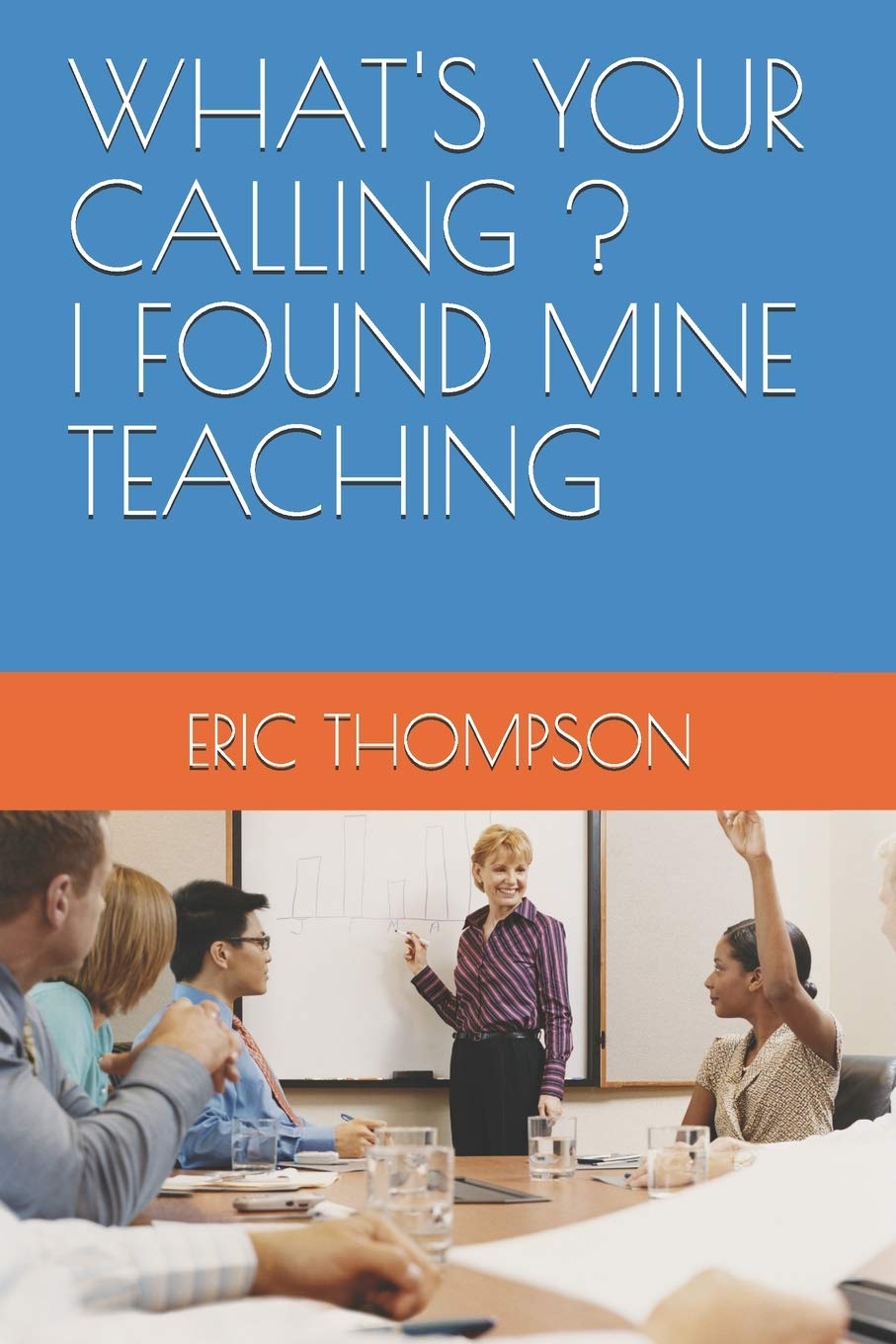
What`s your calling?

This is the title of my new book. A self-development resource and a deviation from the previous books. A calling is defined as a profession or career which someone is strongly attracted to, especially one which involves helping other people. A calling, in the religious sense of the word, is a religious vocation that may be professional or voluntary and, may come from the influence of another person, from a “divine messenger”, or from within oneself. Although, the idea of “calling” is used and has played a significant role within the Christianity realm. Since the early days of the Christian faith, (as well as other religious faith), the term has applied to candidates for the clergy. Whichever way you look at the word, it is an activity that is a person’s most important job, especially one in which the person has an unusually strong interest and ability to perform. Whatever the profession of your choice may be, such as: 

Accountant, Actor /Actress, Architect, Astronomer, Author, Baker, Bricklayer, Bus driver, Pharmacist, Mechanic, etc. It does not have to be teaching but I emphasized so much on teaching here because it is my story, it`s my calling and you can apply the same principles here to find your calling or your real-life purpose. A calling can be defined as the point where passion meets; wisdom, skills, contentment, commitment, willingness, and ability.

Here are some questions for you; what are you passionate about? What skills do you have that you are willing to offer free and still work hard as if you are paid for it? How can you use it to help society?

Teaching for example, as a calling comes as a deep-seated belief or desire that teaching is a career that makes more sense than any other.

When you were little, you probably knew exactly what you wanted to be when you grow up. But when you get older and realized becoming a ballerina or astronaut is unlikely, this classic childhood question becomes way harder to answer. Many of us made it to adulthood maybe even decades into a career without really knowing what we want to do with our lives. 

One option is to muddle through with whatever job we landed in, that job pays the bills, but somehow you know you are not satisfied or another option is to find your real calling.

So how do you get out of your current fog of confusion to a place where you know? What steps to take? You need to dig deep inside of you, find your way to your calling, and your happiness. What is a calling? I found mine teaching!

Language fluency

Language fluency is one of a variety of terms used to characterize or measure a person’s language ability, often used in conjunction with accuracy and complexity.

What does being Fluent really mean? According to the dictionary, the word Fluent means flow or effortlessly, smooth and flowing. As an English language learner, especially starting as an adult, all you need is to try to speak and communicate your intention, not the speed nor the accuracy. In a long term with perseverance, you may attain the native level but, you will need to enjoy the process before then. Two friends, who were English language learners, from the same country attended a gathering one day; one could use only 50 words and the other with over 100 words skills. The first with 50 was more active, could communicate, used the combination of his 50 words very well with mistakes, and used a lot of slangs he had picked up in the movies, but people enjoyed him and he was able to connect with his minimum words than the second with more words ability and possibly more grammar rules. The second friend did not want to make mistakes, ,he would think about structure and grammar rules before speaking, so he was boring. People thought the first person was fluent, because he was able to flow with the crowd.

Although there are no widely agreed-upon definitions or measures of language fluency, someone is typically said to be fluent if their use of the language appears fluid, or natural, coherent, and easy as opposed to slow, halting use. In other words, fluency is often described as the ability to produce language on demand and be understood.

Learn words and phrases with English Connect 365+ series, but try as much as possible to use them, don`t worry about making mistakes, your only mistake is not speaking, grab every speaking opportunity that comes your way. To be an English speaker, you need to believe in yourself and just speak then you will connect. Happy learning and stay safe!

Design a site like this with WordPress.com
Get started